New Year photo sharing starts before December 31
Set up the Circle by December 27 or 28, while plans are still being finalised. Name it for the people rather than the venue if the group will keep using it, such as "College Gang" or "Koramangala Flatmates." Then add a specific Event called "New Year 2027" or "Goa New Year 2027." Invite contributors before anyone is travelling, hosting, or busy getting ready.
Agree on two simple rules. First, everyone adds original photographs to the Event after the celebration rather than treating compressed chat copies as the final collection. Second, nothing from the private Event becomes a public post without permission from the recognisable people in it. This matters at parties where work colleagues, alcohol, private homes, changing relationships, or unguarded moments may appear.
| When | Photo focus | Event action |
|---|---|---|
| December 27-30 | Invites, travel prep, decorations | Create the Circle and New Year Event |
| December 31 afternoon | Journey, check-in, cooking, setup | Start adding the story before the party |
| December 31 evening | Outfits, dinner, games, music | Tag small-group and host moments |
| Midnight | Countdown, embraces, fireworks | One person captures while others participate |
| January 1 | First sunrise, breakfast, clean-up, return | Complete the Event with the quiet aftermath |
Create a year-in-review Circle, not a highlight contest
A year-in-review can happen before the party begins. Ask each person to choose five to ten photographs that explain their 2026. The images do not need to represent achievements. A new job, a lost job, a parent recovering, a difficult exam season, a regular chai spot, a friendship that deepened, a pet, a solo trip, or an ordinary Sunday may carry more truth than a heavily edited travel portrait.
Add the selections to a "Year in Review 2026" Event inside the same Circle. Ask for one sentence or a voice note with each set: what happened, why it mattered, or what the photographer understands differently now. At a home gathering, display the Event on a screen and let each person tell one story. The shared review becomes an activity rather than a social-media ranking.
How India welcomes January 1
Goa remains one of India's most visible New Year destinations, with beach gatherings, music events, church communities, restaurants, and travellers arriving from across the country. Mumbai moves between ticketed venues, Marine Drive atmosphere, rooftops, and house parties. Bengaluru brings pub gatherings, tech-team groups, apartment events, and short drives outside the city. Delhi NCR combines farmhouses, restaurants, society lawns, and winter living rooms where heaters become part of every group portrait.
Smaller gatherings are equally worth preserving. Students may celebrate in a hostel or PG after curfew. New parents may watch the countdown at home with the sound low. A family may begin the year at a place of worship. Flatmates may cook together because every venue is too expensive. Friends in different cities may join by video call. New Year photo sharing should fit the actual group, not pressure everyone to imitate a nightclub reel.
Keep the full party away from public feeds
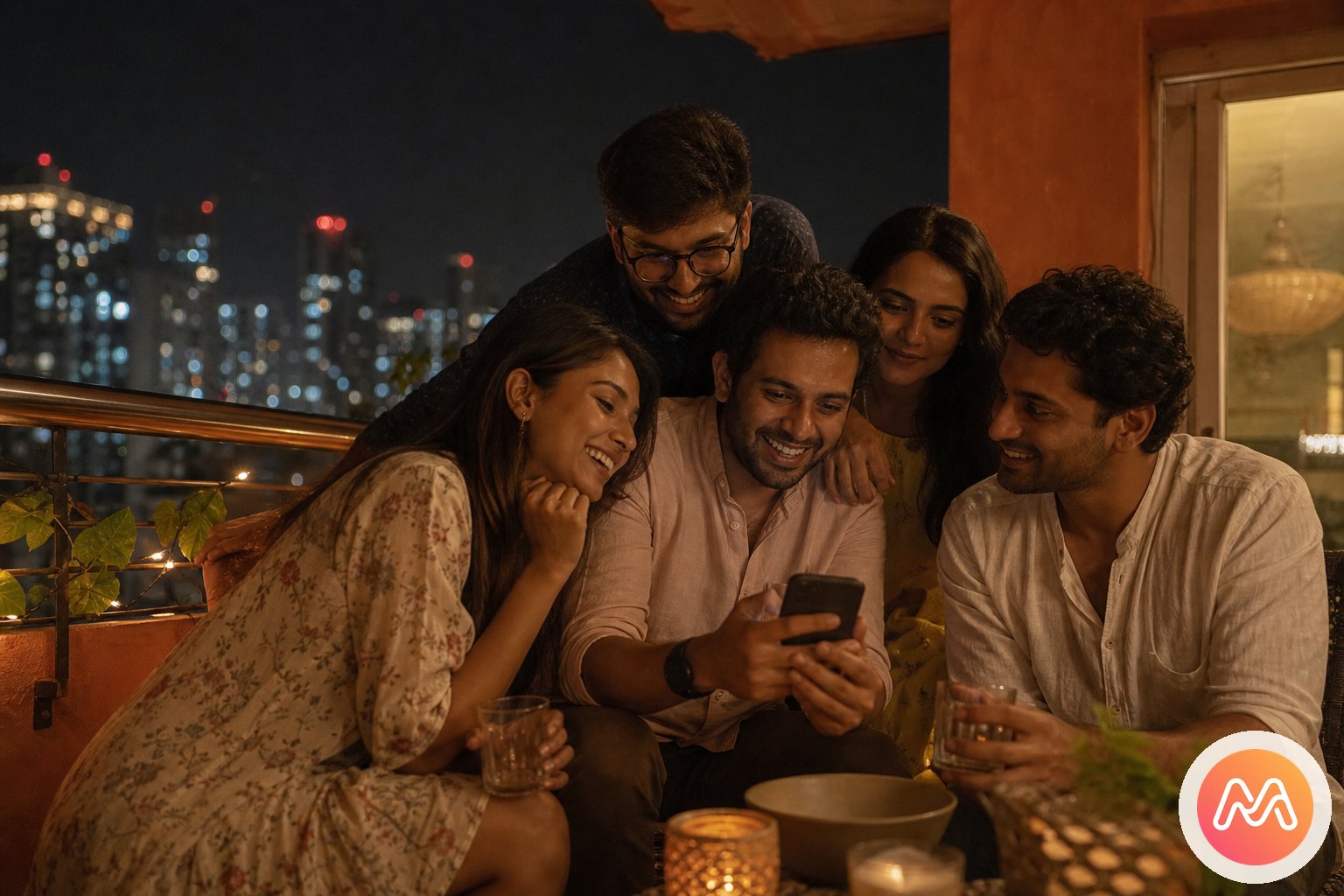
Public feeds flatten New Year's Eve into outfits, lights, and midnight smiles. A private Event can safely hold the rest: the messy kitchen, missed cab, board game, off-key song, friend who fell asleep before midnight, and breakfast made by whoever woke first. Those details make the night recognisable to the group, yet they may expose or embarrass people when posted for a broad audience.
Consent is especially important when alcohol is present. Do not photograph someone in a vulnerable state, and do not treat private access as permission to add every image. Ask before posting close portraits, relationship moments, or pictures that reveal a home address and live location. If a friend asks for a photograph to be removed, respect the request without debate. Shared memory still belongs to the people shown.
| Sharing method | What it does well | New Year limitation |
|---|---|---|
| Memoria Circle | Private multi-person Event | Needs intentional invitations and consent |
| Live coordination and quick greetings | Photos mix with messages and repeated forwards | |
| Chosen public highlights | Encourages performance and broad visibility | |
| Personal cloud | One person's automatic backup | Does not collect the group's full perspective |
A responsible Goa New Year photo plan
For a Goa trip, start the Event with the journey. Train-platform food, airport waiting, luggage squeezed into a cab, the first view from the stay, and friends choosing rooms explain the trip better than beach portraits alone. Add separate Events if the holiday spans several days, or tag each day consistently. Keep booking details, room numbers, and precise live locations out of captions.
Beaches, villages, churches, restaurants, and neighbourhoods are lived places, not sets. Follow photography restrictions, dress and behave respectfully at religious sites, and ask before photographing local residents or workers closely. Avoid flash near performers unless the venue permits it. Use a waterproof pouch near the sea and never step backward toward traffic or waves while framing a shot.
Most importantly, plan safe movement. Choose a designated driver, booked cab, or walkable route before drinking begins. Do not photograph while riding a scooter. Keep the group together and take one check-in frame at agreed points if it helps. No photograph is worth unsafe travel, entering a restricted area, or losing track of a friend in a crowd.
Make home-gathering photos feel alive
House parties offer intimacy but often produce repetitive sofa group pictures. Begin earlier. Photograph groceries on the counter, decorations half-finished, a friend tasting the food, playlists being debated, and the host solving last-minute problems. These frames establish who made the night happen. Take the formal group photograph before midnight, while everyone is present and the room is still relatively calm.
Use the room's warm lamps rather than one harsh ceiling light when possible. Clean the phone lens, avoid heavy digital zoom, and brace the device for low-light photographs. At midnight, choose one person to take a short sequence while everybody else watches the countdown. Afterward, put the camera down for a while. The collection does not improve simply because every minute was recorded.
Give the room a visual rhythm by photographing from three distances. Start wide enough to show decorations and seating, move to medium frames of conversations or games, and finish with details such as handwritten resolutions, a shared playlist, food being served, or the clock approaching midnight. Avoid using flash repeatedly in a small room. It interrupts people and makes every frame look the same. When someone tells a story or performs, capture the listeners as well as the speaker. Their expressions often explain why the moment mattered to the group.
Do not stop the Event at midnight
January 1 often contains the photographs people value most later. Friends wrapped in blankets on a terrace, a first sunrise by the sea, tea from a roadside stall, breakfast cooked with leftovers, confetti being swept from the floor, or a quiet drive home can hold more atmosphere than the countdown itself. They show what the group felt after the performance and noise ended.
Add one short reflection from each person if the group enjoys the idea. It can be a hope, not a resolution, or a voice note about what they want to remember from the night. Avoid forcing public declarations or productivity goals. The Event should leave room for friendship, rest, uncertainty, and ordinary beginnings.
If the group goes out for sunrise, prepare for the change in light. Phones that struggled with a dark dance floor will suddenly capture strong colour and detail. Take one wide frame of the setting, one complete group photograph, and a few quiet candids. Do not climb barriers, stand on wet rocks, or enter unsafe water for a dramatic angle. A calm first morning deserves a calm approach.
The clean-up is also part of hosting. Photograph friends folding blankets, washing cups, finding lost shoes, or sharing the last piece of cake only when they are comfortable with it. Thank the host in the Event caption and include the people who cooked, drove, booked, or stayed back to help. New Year is often remembered as one midnight instant, but care before and after the celebration is what made that instant possible.
January 1 and India's many New Years
This page focuses on the Gregorian New Year that begins January 1, 2027. India also marks renewal through many regional calendars and traditions: Gudi Padwa in Maharashtra, Ugadi across Karnataka, Andhra Pradesh, and Telangana, Puthandu in Tamil Nadu, Vishu in Kerala, Poila Boishakh in Bengal, Baisakhi in Punjab, Cheti Chand for Sindhi communities, and others. They are not decorative variations of one generic festival.
Give each occasion its own Event, vocabulary, and photo plan. A Gudi, an Ugadi pachadi tasting, a Puthandu kani, and a Vishukkani carry distinct cultural meaning. Briefly connecting the Events inside one long-term Circle can show how a mixed-region family marks several beginnings, but the captions and tags should preserve the name and context of each tradition.
Let the friends Circle grow beyond 2027
Keep the Circle after January. Add separate Events for trips, weddings, farewell nights, promotions, birthdays, and the next reunion. When New Year's Eve returns, add a new Event rather than making a new group. The sequence will show friends changing cities, welcoming partners, becoming parents, returning from abroad, or gathering in smaller combinations as life becomes busier.
On January 2, ask everyone for the remaining originals. Remove accidental screenshots and exact duplicates, but keep multiple viewpoints when they reveal different reactions. Add names and place details while the night is fresh. A few minutes of collective follow-up gives the group something far more durable than a disappearing Story.
Frequently asked questions
What is the best way to share New Year 2027 photos with friends?
Create one private Circle for the actual group, then add a New Year 2027 Event before December 31. Invite hosts, travellers, and the friends most likely to take photographs. After the party, everyone adds original photos to the Event and tags moments such as setup, dinner, countdown, midnight, first sunrise, and New Year's Day. This collects every perspective without making the whole night public.
When should we set up New Year photo sharing?
Set it up several days before New Year's Eve, ideally by December 27 or 28, 2026. Add the Event, invite the group, and agree on the privacy boundary before the celebration. If the plan involves travel to Goa or another destination, create the Circle before departure so journey, check-in, beach, party, and return photos all enter the same story.
How do we collect photos from a large New Year's Eve party?
Invite a smaller core group of trusted contributors rather than every person at a large venue. For a private house party, invite all known guests if the host and group agree. Ask each contributor to add their best original images the next morning. Avoid uploading portraits of strangers or visibly intoxicated guests without consent, even when the Event itself is private.
Should New Year party photos stay private?
By default, yes. Party images can reveal a home, location, guest list, alcohol use, and moments people would not choose for a professional or public audience. A private Circle lets friends relive the full night without turning it into a follower-facing performance. Any public post should be selected separately with the clear approval of the people shown.
Can we use one Circle for a New Year trip to Goa?
Yes. Create a Circle for the travel group and add Events such as Journey to Goa, New Year's Eve 2026, First Sunrise 2027, and Return Trip. Tag beaches, meals, music, and group moments. Keep live location details private, respect venue photography rules, and avoid treating local communities or workers as background props.
How can we make a year-in-review photo Event?
Ask each Circle member to choose a small set of meaningful images from 2026, not only the most polished. Add them to a Year in Review 2026 Event with one sentence or voice note explaining why each moment mattered. Include everyday milestones, difficult periods, friendships, work, travel, and home life. The result becomes a collective reflection rather than a highlight reel.
Does this guide cover Gudi Padwa, Ugadi, or Puthandu?
Only briefly. The primary subject is Gregorian New Year photo sharing for January 1, 2027. Gudi Padwa, Ugadi, Puthandu, Vishu, Poila Boishakh, Baisakhi, Cheti Chand, and other Indian New Year traditions have their own calendars, foods, rituals, and communities. Give each its own Event and culturally specific moment tags instead of treating every New Year as one generic occasion.
Can the same friends Circle be used after New Year?
Yes. A Circle is for the people, while Events mark occasions. Keep the same college gang, flatmates, office friends, or travel group Circle for birthdays, trips, reunions, and the next New Year. Years later, each December 31 Event remains distinct while the Circle shows how the friendship changed across cities, careers, relationships, and life stages.
One Circle for everyone who was there
Social Memory begins with a stable group. Your Circle might be school friends now living in several cities, college classmates reuniting for one night, an office team, cousins, neighbours, or four flatmates. The Event marks the occasion inside that relationship. This distinction lets the same group use the Circle again without mixing New Year 2027 into birthdays, trips, and daily moments.
Keep the tags simple: travel, setup, dinner, games, dance, countdown, midnight, fireworks, first sunrise, breakfast, and return journey. Add the city when the group celebrates in different places. Memoria was built in India, where celebrations commonly move between chats, cities, languages, and several people's cameras. The Circle brings those perspectives into one private story.
Create a Circle
Name it for the people who were there - college gang, trip crew, wedding friends, or family. Invite-only. No public profile.
Add an Event
Goa 2026, Durga Puja, a farewell night, a birthday dinner. Each Event keeps its photos and voice notes together.
Tag moments
Upload full-resolution photos. Add a voice note so the story stays with the memory. Everyone in the Circle can contribute.
Relive together
One private timeline. Heart reactions. Memoria AI search in Hinglish. No algorithm. No ads. No strangers.