Durga Puja photo sharing dates for 2026
Mahalaya is expected on Saturday, October 10, 2026. For many Bengali homes, the season begins before sunrise with Mahishasura Mardini, tarpan, and the emotional shift into Devi Paksha. The main pandals usually open fully by Shashthi on Saturday, October 17. Saptami is Sunday, October 18. Ashtami is Monday, October 19. Navami is Tuesday, October 20. Vijayadashami and visarjan fall on Wednesday, October 21. Association programmes may place some rites differently, especially where tithis overlap.
Treat this as a photography window rather than one main date. Use Mahalaya for dawn, preparation, and older-family stories. Use Panchami or Shashthi for cleaner pandal architecture before peak crowds. Saptami and Ashtami bring anjali, new clothes, reunions, and the largest volume of group pictures. Navami carries the feeling of a last full night. Dashami changes the visual mood entirely with boron, pronam, sindoor khela in participating communities, processions, and visarjan.
| Festival phase | Expected 2026 date | Photo focus |
|---|---|---|
| Mahalaya | October 10 | Dawn listening, tarpan, preparation, family stories |
| Shashthi | October 17 | Bodhan, first full darshan, pandal design |
| Saptami | October 18 | Nabapatrika, morning puja, first major route |
| Ashtami and Navami | October 19-20 | Anjali, bhog, aarti, dhunuchi naach, reunions |
| Vijayadashami | October 21 | Boron, sindoor khela, pronam, procession, visarjan |
A Puja album should hold a cultural story
The protima is the visual centre, but the complete Puja story extends far beyond it. Photograph the pandal from the approach road so its scale makes sense. Move closer for the materials, brushwork, lighting, textiles, sholar saaj, and expressions of Durga, Lakshmi, Saraswati, Kartik, and Ganesh. Include the dhakis, priests, artisans, electricians, volunteers, cooks, security workers, and neighbourhood residents whose labour makes a few extraordinary days possible.
Then turn the camera toward your own people. Puja reunions often bring childhood friends back to the para and relatives back to Bengal. Capture shoes piled outside a home, someone pinning a saree before anjali, children learning to hold flowers, elders receiving pronam, paper plates of khichuri bhog, and tired faces over tea after midnight. These images may not win a photography contest, but they restore sound, relationship, and atmosphere when viewed years later.
If you visit the same puja more than once, document how the space changes. Morning light reveals construction and craft differently from the theatrical illumination of evening. A lightly occupied pandal on Shashthi becomes a river of visitors by Ashtami. Flowers, offerings, and alpona change through the days, while volunteers settle into routines that an opening-night photograph cannot show. Add the day and approximate time to these sequences so viewers can follow the transformation.
Also include objects that carry family meaning. The conch used by a grandparent, a child's first anjali flowers, an association badge saved for years, a handwritten bhog token, or the programme for a cultural evening can anchor a larger set of images. Photograph the object in context and ask someone to explain it in a short note. Cultural depth comes from connections between image, person, place, and story, not from visual grandeur alone.
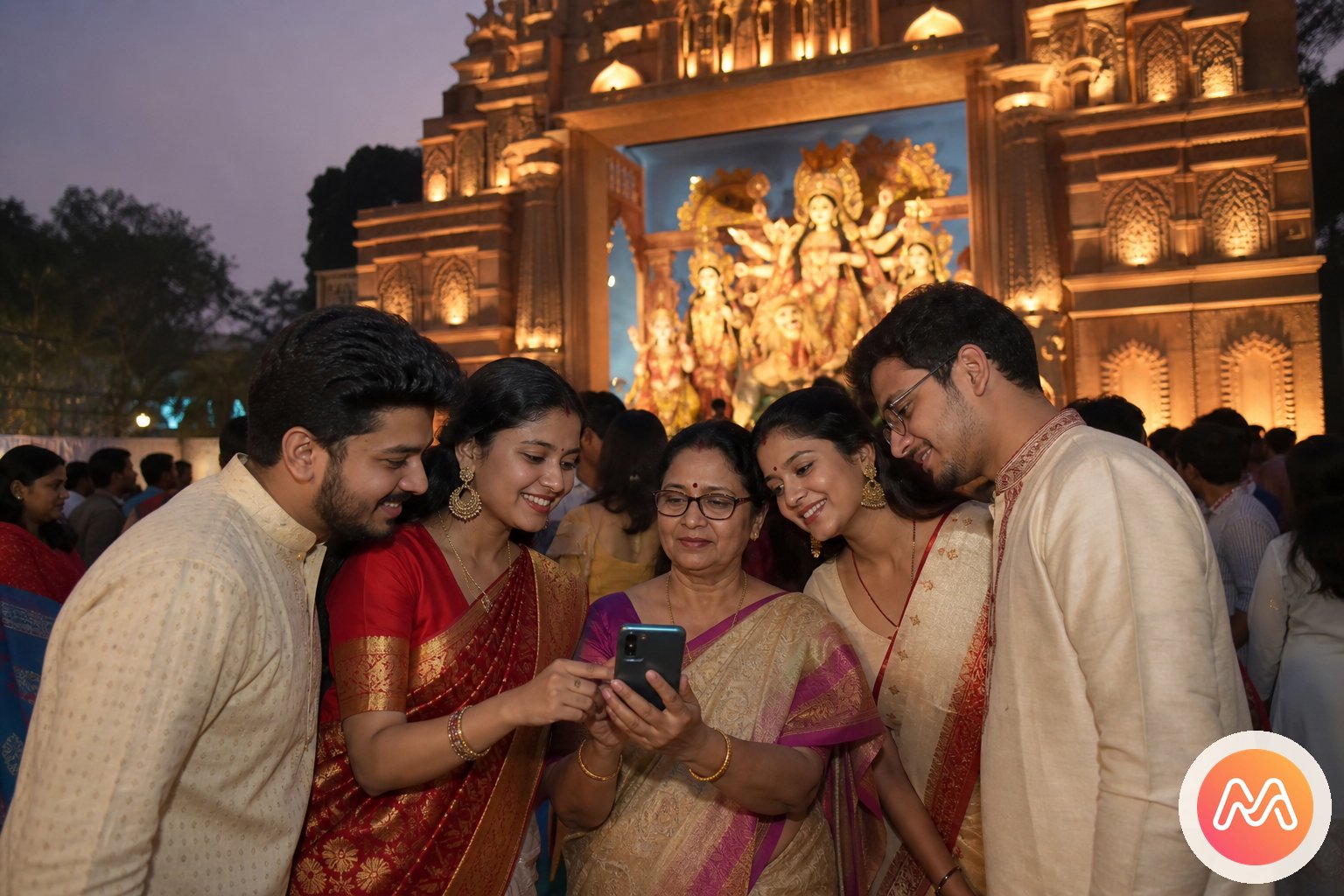
A five-day Durga Puja photography plan
Shashthi: Begin with space and anticipation. Photograph the approach, facade, theme statement, empty or lightly crowded interiors, bodhan, first family darshan, and volunteers preparing for the rush. This is the best time for architectural frames that become impossible once peak queues begin.
Saptami and Ashtami: Shift toward people and ritual. Capture Nabapatrika if your puja permits photography, morning anjali, saree and panjabi portraits, elders with children, bhog service, dhak, and candid reunions. During aarti or dhunuchi naach, use short bursts and hold the phone steady rather than relying on digital zoom. Never block a devotee or the ritual path for a photograph.
Navami and Dashami: Photograph the last-night energy and the signs of farewell. Include food stalls, backstage fatigue, committee friends, closing aarti, boron, pronam, and the procession. During sindoor khela, ask before taking close portraits and keep the camera away from anyone who does not wish to participate. At visarjan, balance wide procession frames with quiet reactions. The emotional transition matters as much as the spectacle.
From Kolkata pandals to Bengali associations
In Kolkata, the route itself becomes part of the memory. North Kolkata offers historic bonedi bari traditions and lanes where context matters as much as the destination. South Kolkata and newer districts often present large thematic structures designed to be read from entrance to exit. Add the neighbourhood name when tagging each stop, and take one exterior frame before the close-up series. Metro signs, tram lines, rain, crowds, and the late-night food break create a recognisable city diary.
Delhi's CR Park has a different rhythm. Multiple pujas, food stalls, cultural programmes, and visitors from across NCR can fill one evening. Add Events by mela ground or day, and include stage performances as well as protima photographs. In Mumbai and Bengaluru, Bengali associations may combine puja with community lunches, children's programmes, music, theatre, and reunions among people living far from Bengal. Photographing volunteers and cultural performers records how the community carries the festival into another city.
Smaller-town and residential pujas deserve equal attention. Their beauty is often relational: the same families cooking, decorating, rehearsing, and worshipping together. A private Circle gives those contributors a shared home without forcing them to imitate the scale or aesthetics of a famous Kolkata installation.
Pandal photography etiquette and safety
A crowded pandal is a place of worship before it is a photo location. Follow committee signs, keep flash off when requested, and do not stop in a moving queue for repeated poses. Avoid standing directly in front of anjali participants or crossing between the priest and the protima. Photograph children only with a parent or guardian's consent, and ask before taking an intimate close-up during prayer, boron, or sindoor khela.
Protect the group as well as the photographs. Agree on a meeting point, keep phones secured in dense crowds, carry a power bank, and avoid live-posting a child's exact location. If the route includes many stops, add photos only while seated at a safe break or after returning home. Social Memory should deepen participation, not pull attention away from the people standing beside you.
Keep the Puja Circle alive across years
The most valuable collection is not the one with the largest number of nearly identical idol photographs. It is the one that keeps relationships and change visible. Add a fresh Event every year inside the same Circle. As the timeline grows, it reveals who returned to the para, which children began performing on stage, how grandparents participated, and how a community's visual language changed from one theme to the next.
In the week after Dashami, ask every contributor to add the photographs still sitting on their phone. Tag the strongest moments and attach names or a short voice note where future viewers may not know the story. A recording of an elder explaining an old bonedi bari custom can carry more heritage than another perfect wide shot. Years later, the Circle becomes a record of belonging built by everyone who was there.
Frequently asked questions
When is Durga Puja 2026?
Mahalaya falls on Saturday, October 10, 2026. The main five days run from Maha Shashthi on Saturday, October 17 through Vijayadashami on Wednesday, October 21. Maha Saptami is Sunday, October 18. Maha Ashtami is Monday, October 19. Maha Navami is Tuesday, October 20. Confirm Sandhi Puja timing with your local puja committee.
How should a family handle Durga Puja photo sharing across many pandals?
Create one private Circle for the people who are pandal-hopping together, then add separate Events for each day or route. For example, use North Kolkata Saptami, South Kolkata Ashtami, and Dashami Visarjan as distinct Events. Everyone can tag moments after each stop, which keeps different photographers and phones connected to the right part of the Puja story.
Is Durga Puja photo sharing different from Navratri photo sharing?
Yes. Durga Puja coverage centres on bodhan, pushpanjali, dhunuchi naach, bhog, pandal art, protima darshan, sindoor khela, and visarjan. A Navratri guide often centres on nine garba nights, dandiya, and Gujarati dress traditions. The dates may overlap in some years, but the rituals, visual language, routes, communities, and photos are distinct.
Can people outside Kolkata join the same Durga Puja Circle?
Yes. A Circle can include relatives in Kolkata, friends visiting CR Park in Delhi, Bengali association members in Mumbai or Bengaluru, and family living abroad. Each person contributes their own view. The result feels like a shared Puja diary rather than several unrelated chat threads, while access remains limited to the people invited.
What are the most important Durga Puja photos to take?
Capture the pandal facade, the full protima, close details of the idol and sholar saaj, family portraits, anjali, dhak, dhunuchi naach, bhog, adda, volunteers at work, children with grandparents, Dashami pronam, sindoor khela where appropriate, and the visarjan farewell. Include ordinary moments such as waiting in line or eating a late-night roll because those details bring the festival back years later.
How can we keep Durga Puja photos private?
Invite only the relatives or friends who belong in the Circle. Avoid posting home interiors, children's portraits, and close ritual moments publicly by default. Memoria is a Social Memory app, so the Circle is designed around a known group rather than followers or strangers. Before adding association photographs, also respect the committee's rules and ask before sharing sensitive close-ups.
When should we create our Durga Puja Circle?
Set it up between Mahalaya and Shashthi. That gives everyone time to join, understand the Event names, and add a few older Puja photos before the crowded days begin. If your group plans a detailed Kolkata route, create Events before Saptami so contributors can add photos quickly after each pandal instead of deciding where everything belongs at midnight.
Can the same Circle be used again next Durga Puja?
Yes. Keep the Circle for the same family, para group, or friends, then add a new Event for Durga Puja each year. A 2027 Event can sit beside 2026 without mixing the two celebrations. Over time, the Circle shows changing pandal themes, growing children, older relatives, new friendships, and the rituals your group returns to every autumn.
A Social Memory Circle for the whole Puja group
Memoria starts with people, not a public audience. A Circle can represent your household, your para friends, your university Bengali association, or the relatives who meet each year in CR Park. Inside that Circle, an Event gives Durga Puja 2026 its own boundary. The event can receive photographs from every invited member without turning family ritual into a follower-facing post.
Tag moments with words your group will recognise later: Mahalaya dawn, Shashthi bodhan, Saptami route, Ashtami anjali, bhog, dhunuchi naach, Navami adda, Dashami pronam, sindoor khela, and visarjan. The purpose is not to make the day feel administrative. A few meaningful tags preserve the reason each group of images mattered. Memoria was built in India, where an occasion commonly belongs to many contributors and several generations at once.
Create a Circle
Name it for the people who were there - college gang, trip crew, wedding friends, or family. Invite-only. No public profile.
Add an Event
Goa 2026, Durga Puja, a farewell night, a birthday dinner. Each Event keeps its photos and voice notes together.
Tag moments
Upload full-resolution photos. Add a voice note so the story stays with the memory. Everyone in the Circle can contribute.
Relive together
One private timeline. Heart reactions. Memoria AI search in Hinglish. No algorithm. No ads. No strangers.