Karva Chauth photo sharing plan for October 29
Thursday, October 29, 2026 is the date to plan around in India. The familiar sequence starts before dawn with sargi in families that follow the tradition. Daytime may include mehendi, rest, calls with relatives, gift exchanges, and getting ready. Evening puja often takes place before the moon appears. The fast is traditionally broken after sighting the moon, but the precise timing changes by city and weather can delay a visible sighting.
Do not schedule the entire photo session for the predicted moonrise minute. Everyone may be tired, terraces can be crowded, clouds can intervene, and the ritual should not be repeated for the camera. Take planned couple portraits in soft pre-sunset light. Assign one trusted person to document the moonrise sequence quietly. If nobody else is present, use a stable phone position and then put the device aside so the couple can be fully in the moment.
| Part of the day | What to capture | Practical note |
|---|---|---|
| Before dawn | Sargi, family kitchen, first light | Use soft available light and keep the mood quiet |
| Afternoon | Mehendi, gifts, getting-ready details | Photograph hands before bangles cover the design |
| Before sunset | Couple and individual portraits | Best window for relaxed planned photographs |
| Evening puja | Thali, karva, katha gathering | Ask before photographing worship |
| Moonrise | First sighting, sieve, water, emotion | Use local timing and never force a repeat |
| After the fast | Dinner, laughter, family candids | Capture care and relief, not only the plated meal |
Photograph the whole day, not only the moon
The moonrise image carries cultural recognition, but earlier details explain the relationship around it. Photograph who prepared sargi and how it was served. Include an old recipe, a handwritten note, or the video call connecting a mother and daughter in different cities. Take close frames of mehendi once the colour develops, then wider images that show friends or sisters sitting together. A portrait of a lehenga, saree, suit, or jewellery becomes more meaningful when paired with the person who helped choose or drape it.
Watch for care rather than only ritual symbols. A partner taking over household work, a glass of water waiting on the table, relatives checking the sky, friends making one another laugh, or an elder guiding the puja can reveal how the day is actually lived. After moonrise, include the first relaxed conversation and shared meal. The best Event will contain polished portraits and imperfect candids together.
Sound and memory can deepen those photographs. Ask the person who prepared sargi to record a short voice note about what was served and who taught the recipe. Invite an elder to explain the katha, thali arrangement, or a custom specific to the family. A partner can describe what they noticed while waiting for the moon. These accounts should be offered, never demanded from someone who is tired or focused on worship.
Include the environment without revealing more than the couple wants. A wide frame of women gathering for puja, hands passing a thali, or silhouettes scanning a cloudy sky can preserve atmosphere while avoiding constant close-ups. Details such as a handwritten message, gift wrapping, a family karva, or moonrise reflected in a window add variety. Together, these images show a lived day rather than a checklist of poses.
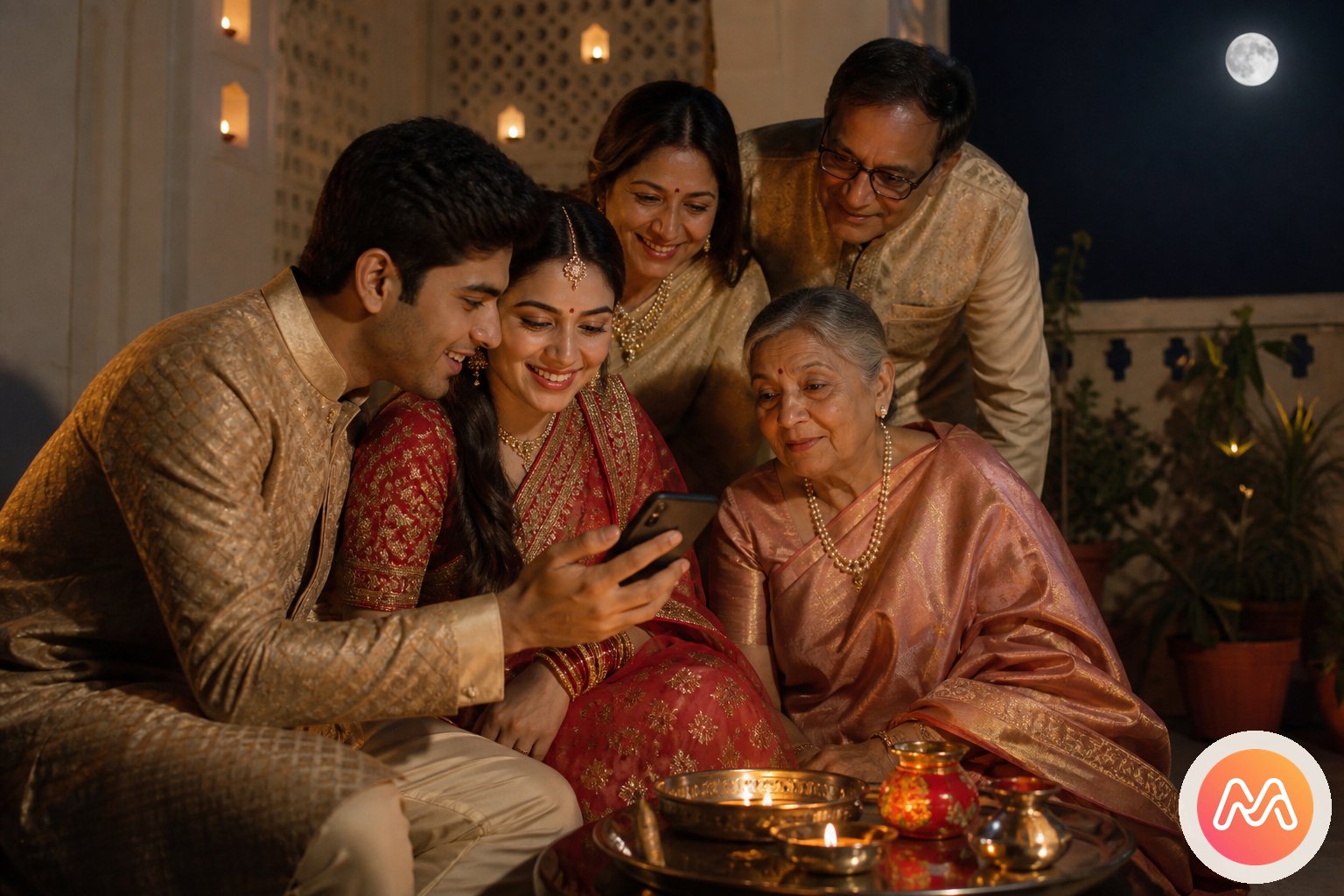
North Indian traditions and changing practice
Karva Chauth is especially visible across Punjab, Haryana, Delhi, western Uttar Pradesh, Rajasthan, and parts of Himachal Pradesh and Madhya Pradesh, with strong urban participation in Mumbai, Bengaluru, and other cities. Customs differ between households. Sargi may be prepared by a mother-in-law, sent from another city, or adapted to the family's circumstances. Puja may happen at home, in a residential society, at a temple, or over a video call when relatives cannot gather.
Contemporary couples also shape the day in different ways. Some husbands fast alongside their wives. Some partners exchange practical gestures of care. Some people cannot fast for medical, pregnancy, work, or personal reasons and still participate in prayer or dinner. A respectful photograph records the practice a couple chooses, not an idealised script imposed from outside. Never ask someone to hide food, exhaustion, medication, or a different observance simply to create a socially familiar image.
Private couple photos are not Instagram content
Instagram naturally selects the most polished parts of Karva Chauth: matching outfits, cinematic terrace lighting, jewellery details, and a posed sieve portrait. There is nothing wrong with sharing one chosen image publicly when both partners agree. The problem begins when the platform becomes the only record. Public posting encourages a performance while the photographs that show vulnerability, humour, family care, and fatigue remain scattered on phones.
Privacy also has practical value. Terrace photographs can reveal a home location. Family frames may show children or relatives who did not consent to public posting. A close ritual sequence can feel meaningful to the couple but uncomfortable as content for colleagues and casual followers. A private Circle gives the couple control over the audience without reducing the day to a hidden folder that only one partner can access.
| Space | Audience | Best role on Karva Chauth |
|---|---|---|
| Memoria Circle | Couple and invited people | Complete private story from every contributor |
| Followers and potentially wider viewers | One or two mutually approved public highlights | |
| WhatsApp chat | Members of a selected conversation | Live updates and moonrise coordination |
| Phone gallery | One device owner | Personal originals before adding to the shared Event |
Build a shared Event around the couple
A Memoria Circle can be as small as two people or include the close relatives and friends who are part of the day. The couple decides the boundary. Inside the Circle, add one Event called "Karva Chauth 2026" and invite the people likely to take photographs. The sister who handles portraits, the mother who prepared sargi, and the friend at the society puja can all contribute without sending repeated copies to several chats.
Use a short set of tags: sargi, mehendi, getting ready, puja, moonrise, fast-breaking, couple portraits, and dinner. These labels preserve sequence without making anyone spend the evening filing images. Memoria is built around Social Memory, where a meaningful occasion is seen through more than one camera and belongs to the people in it.
- 1
Create a Circle
Name it for the people who were there - college gang, trip crew, wedding friends, or family. Invite-only. No public profile.
- 2
Add an Event
Goa 2026, Durga Puja, a farewell night, a birthday dinner. Each Event keeps its photos and voice notes together.
- 3
Tag moments
Upload full-resolution photos. Add a voice note so the story stays with the memory. Everyone in the Circle can contribute.
- 4
Relive together
One private timeline. Heart reactions. Memoria AI search in Hinglish. No algorithm. No ads. No strangers.
A practical Karva Chauth portrait guide
Begin with individual portraits before the couple poses together. Photograph the full outfit, then move closer for mehendi, chooda or bangles, sindoor, jewellery, buttons, cufflinks, or a meaningful gift. Use window light indoors or open shade outside. Avoid harsh overhead lighting that creates deep eye shadows. Clean the phone lens, turn off beauty filters, and take a few frames at eye level before experimenting with angles.
For couple photographs, prompts work better than rigid poses. Ask the pair to walk slowly, adjust one another's clothing, compare mehendi, or talk for a minute while the photographer stays ready. Include one formal frame for elders and several candid frames for the couple. Leave enough space around the subjects so the photograph can be cropped later without cutting jewellery or the edge of the thali.
At moonrise, prioritize steadiness and emotion. Night mode can blur hands if people move, while flash can flatten the scene and distract from the ritual. Brace the phone against a wall or use both hands. Take one wider frame establishing the terrace and sky, then a few closer frames of the exchange. The moon may appear tiny on a wide phone lens, and that is fine. The human reaction is the real subject.
Make a short checklist with the couple before getting ready begins, then let the rest unfold. Useful combinations include one portrait with each set of parents, one with siblings or close friends, and one full-length frame that shows both outfits. Photograph the thali once before puja so nobody has to pause the ritual later. If several relatives are using phones, ask one person to take the essential frames while others remain present. Ten attentive photographs from a calm sequence usually carry more feeling than a hundred near-identical bursts taken from every side.
Karva Chauth for long-distance couples
Work, study, military service, travel, and migration often place partners in different cities or countries. The day may include a video call at sargi, messages during work, two separate sunsets, and a moon seen at different local times. Do not treat those screens as a lesser version of the occasion. Photograph each environment, take a careful screenshot with consent, and add both perspectives to the same Event.
Time zones require clarity. Karva Chauth 2026 is observed on October 29 in India, while local religious guidance abroad may differ because tithi and moonrise occur differently. Follow the local panchang relevant to the observer. In the Circle, write the city beside each moonrise tag. Years later, the distance, waiting, and effort to connect will be part of the relationship story rather than a gap in it.
Put consent and health before the camera
A fast can affect energy, concentration, and comfort. Do not keep someone standing in heavy clothing for a long session, ask for repeated poses in the afternoon heat, or delay water after the ritual to get another take. Build breaks into the plan and accept a short portrait session. Anyone with medical concerns should follow professional health advice and their own needs, not pressure from a photo schedule.
Consent matters between couples too. Agree before the day about who can see photographs, whether any image will be public, and which moments should stay undocumented. Ask elders before photographing puja closely. If a society group contributes images, avoid adding identifiable portraits of unrelated residents without permission. The Circle's privacy boundary is meaningful only when contributors respect the people inside every frame.
Turn one evening into a relationship timeline
The morning after Karva Chauth, each contributor should add their strongest original frames. Keep variations only when they capture different expressions, and do not delete imperfect photographs that carry a real story. Add a brief note about the city, terrace, family recipe, gift, or unexpected cloud cover. A voice note from the couple or an elder can preserve details that the image alone cannot explain.
Next year, keep the same Circle and add a fresh Event. Over time, the sequence may move through a first Karva Chauth, a new home, long-distance years, children joining the terrace, or changing family practice. The value is not repetition. It is the ability to see partnership and community change while the day returns.
Frequently asked questions
When is Karva Chauth 2026?
Karva Chauth 2026 falls on Thursday, October 29, 2026 in India. The fast is associated with Kartik Krishna Paksha Chaturthi and is traditionally completed after moon sighting. Moonrise differs by city, so couples should check a reliable local panchang or their community's guidance on the day rather than using one national time.
What should a Karva Chauth photo collection include?
Include the full emotional arc: sargi before dawn, mehendi details, bangles and jewellery, getting-ready candids, the decorated thali and karva, the evening puja gathering, couple portraits before sunset, the first moon sighting, the sieve ritual if your family follows it, breaking the fast, dinner, and quiet moments between partners. Photos of mothers, mothers-in-law, sisters, and friends also preserve the community around the day.
Why keep Karva Chauth photos off public Instagram?
Many of the most meaningful images are private: a tired face late in the fast, a couple's exchange at moonrise, a home terrace, family rituals, and close portraits. Instagram rewards public presentation and a small selection of polished images. A private Memoria Circle lets the couple and chosen relatives keep the full story without making intimate moments visible to followers or strangers.
How does Karva Chauth photo sharing work for couples in different cities?
Create a Circle for the couple and invite only the people they want involved. Add a Karva Chauth 2026 Event. Each partner can contribute preparations, video-call screenshots, local moonrise, gifts, and the moment they reconnect. Long-distance participation will look different from one-home celebrations, but the Event keeps both perspectives in one shared story.
Can husbands or partners participate in the fast and the Circle?
Yes. Families observe Karva Chauth in different ways. Some follow the traditional practice of a married woman fasting for her husband, some couples fast together, and some focus on prayer, care, or a shared meal without a strict fast. The photo Circle should reflect the couple's real practice without judging it. Health needs and personal choice come before a photograph or social expectation.
When should we take couple portraits on Karva Chauth?
Take the main portraits during the final hour before sunset when outdoor light is softer and energy is usually better than it will be during the moonrise rush. Capture full outfits, mehendi, jewellery, and a few simple interactions. At moonrise, keep photography minimal and let the ritual happen naturally. A steady observer can take candid frames without asking the couple to repeat the moment.
How do we set up private Karva Chauth photo sharing on Memoria?
Create a private Circle for the couple or close family, add an Event called Karva Chauth 2026, invite the selected contributors, and agree on a few moment tags such as sargi, mehendi, puja, moonrise, and dinner. After the day, everyone adds their best original photos to the Event instead of relying on compressed copies in a chat.
Can we add old Karva Chauth photos from previous years?
Yes. Add a separate Event for each year so the sequence stays clear. Older photographs may be scans, phone pictures, or images recovered from family chats. Ask elders or the couple to add names and a short voice note. Across years, the Circle shows changing homes, traditions, outfits, relationships, and the people who gathered around the ritual.