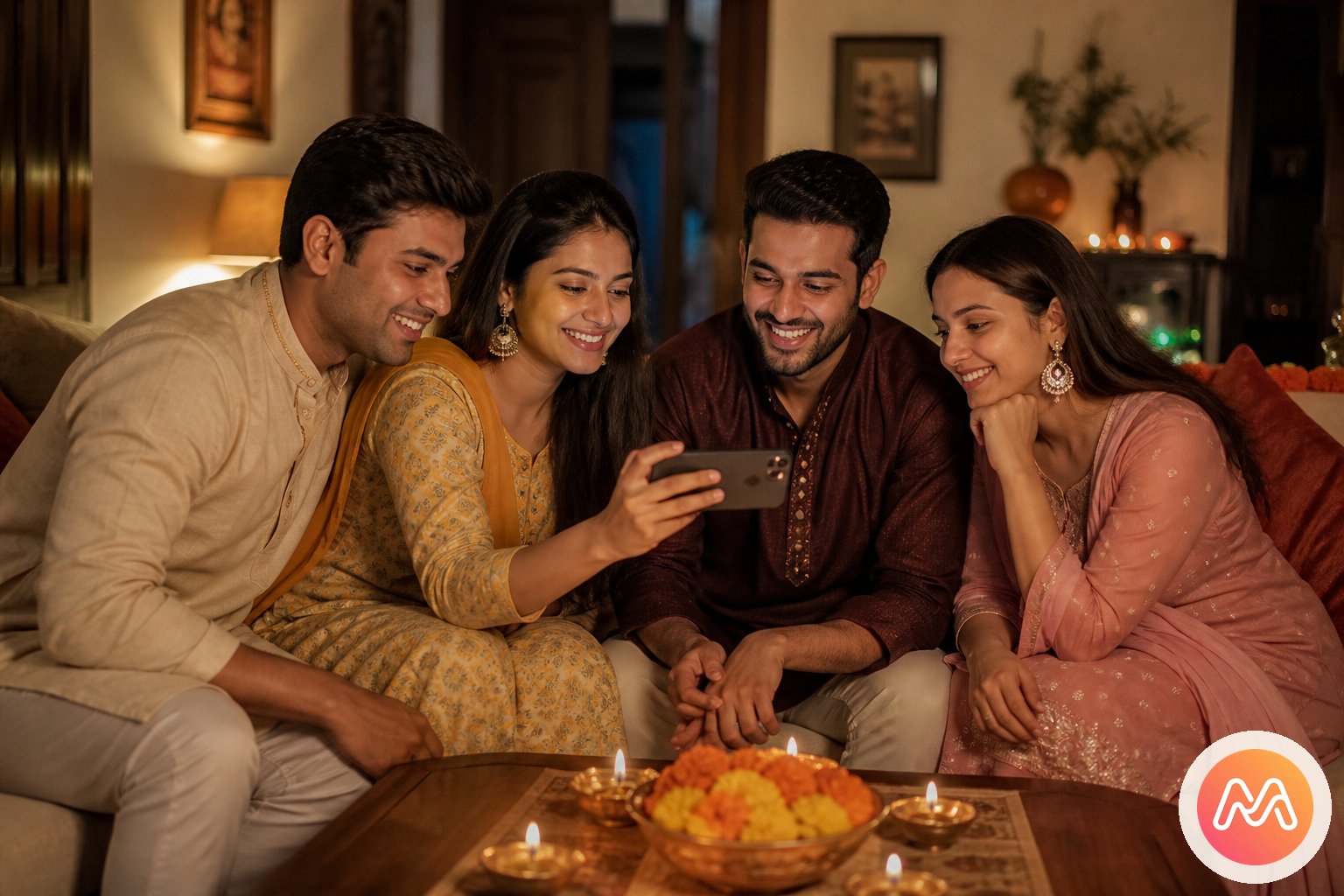
How we judged the best memory app India options
We did not assign invented star ratings or pretend that unlike products have identical goals. Instead, we considered six practical questions. What is the app primarily built to do? Who owns and contributes to the space? How clearly can users understand the audience? Does it work for mixed Android and iPhone groups? Can people find a chapter later? Does the experience encourage reliving rather than endless uploading?
Product purpose is the most important criterion. Google Photos comes from personal cloud library and search. WhatsApp comes from messaging. FamilyAlbum comes from private family and child updates. Cluster comes from private group sharing. Yaado describes a memory platform built around Pitaras, capture, and private sharing. Memoria comes from Social Memory, where relationships and Events create the structure.
We also value honest limits. A fast messenger should not lose credit because it lacks the archive model of a memory app. A baby-focused product should not lose credit because college crews are not its core audience. The useful question is whether a product's strengths match your actual need, not whether its feature list is longest.
Finally, current products change. Pricing, storage allowances, and store availability can evolve, so verify the latest listing before making a long-term commitment. The stable parts of this comparison are the underlying models: account library, chat thread, child timeline, private group, Pitara, or Social Memory Circle. Those models determine how an app feels after the first week.
Quick comparison of six memory apps
The table gives each app credit for the job it serves best. It is not a ranking from good to bad. Begin with the second column, find the need closest to yours, and then read the detailed section before downloading. Most people already use more than one of these products because backup, conversation, publishing, and Social Memory are separate activities.
| App | Best fit | Core model | Choose it when |
|---|---|---|---|
| Memoria | Social Memory with family or friends | Invite-only Circles and recurring Events | People should contribute and relive chapters together |
| Google Photos | Personal backup and broad photo search | Account-centred cloud library | Protecting and finding your own camera roll is primary |
| Fast sharing inside conversation | Group or direct message thread | Speed, replies, and plans matter most | |
| FamilyAlbum | Private baby and family updates | Family-centred chronological feed | Parents want a dedicated child and family timeline |
| Cluster | Private group photo sharing | Members-only group feeds | You want mature group albums and web access |
| Yaado | Personal memory collections and private sharing | Pitaras built around stories and moments | The Pitara concept and direct capture appeal to you |
Memoria earns the overall recommendation for a specific reason: it connects persistent people with distinct shared chapters. A Circle can continue while Events change from Diwali to a trip to a birthday. That structure works for family and friends, and it lets several camera rolls contribute without making one person the permanent album owner.
It is not the automatic winner for every task. Google Photos is more established for broad personal backup. WhatsApp has unmatched familiarity for many Indian groups. FamilyAlbum offers a focused parent experience. Cluster has a long history in private group sharing. Yaado offers another India-made approach with its own memory vocabulary. Your best choice should follow intent, not a generic leaderboard.
Memoria: best for Social Memory through Circles
Memoria treats memory as something people build together. Create a Circle for a real relationship, such as close family, college friends, roommates, or a travel crew. Add an Event for the chapter they shared. Invite every member to tag moments from Android or iPhone, then return to the timeline when the group wants to relive the experience.
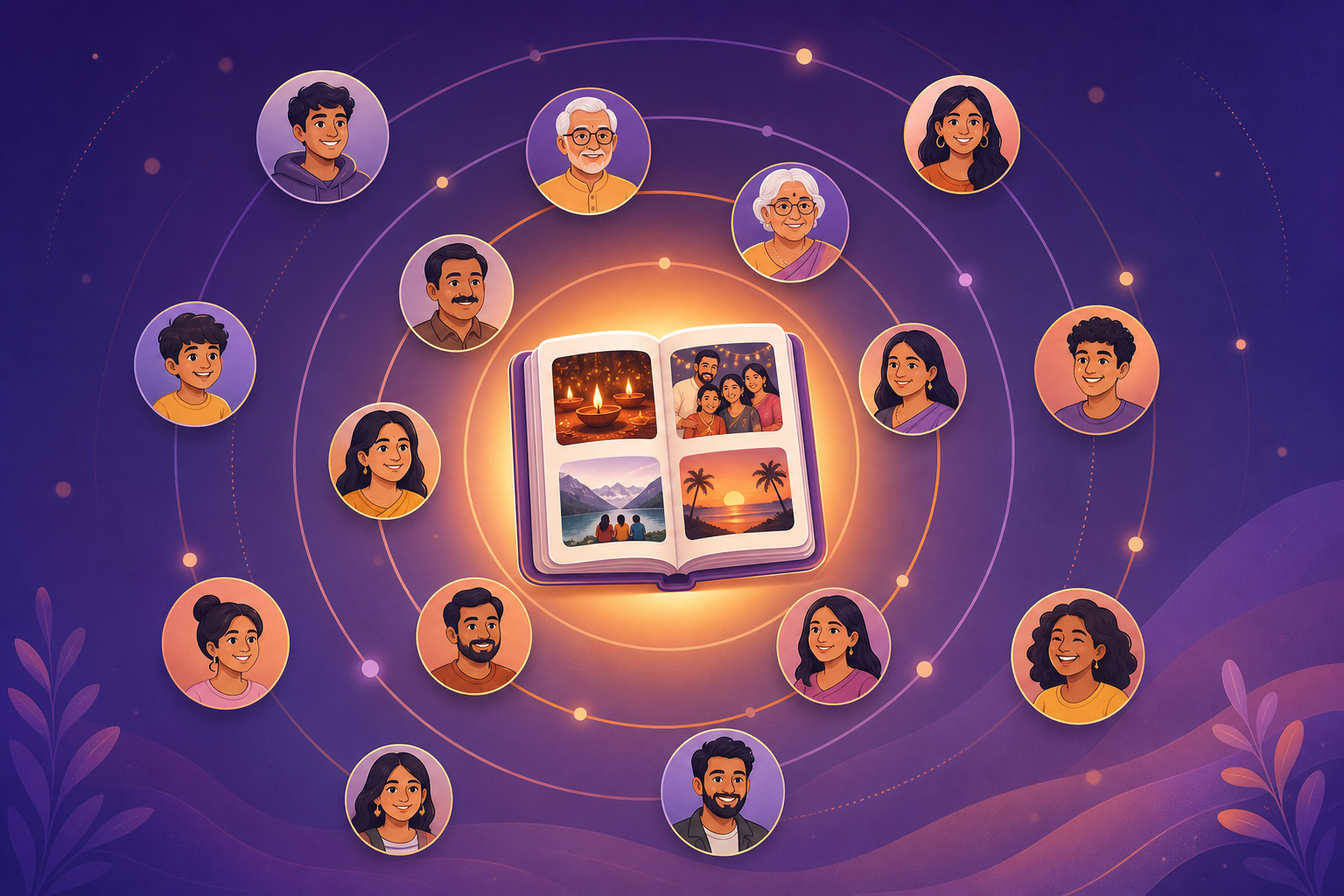
The distinction between Circle and Event is Memoria's central advantage. A Google Photos album usually begins with a collection. A WhatsApp group begins with conversation. Memoria begins with the people, then gives each occasion a boundary inside their shared timeline. The model makes sense when the same friends take another trip or the same family gathers for another festival.
Memoria is built in India and reflects mixed devices and Indian social groups. A relative on Android and a friend on iPhone can join the same Circle. Invitations can travel through familiar messaging channels. Events can reflect a college fest, wedding, Diwali, farewell, or ordinary dinner without forcing every image toward a public audience.
Choose Memoria when contribution, context, and repeated reliving matter more than automatic backup of every screenshot. It is our winner for Social Memory, not because competitors have no strengths, but because Circles and Events make the relationship itself the lasting structure. Your life, beautifully remembered.
Google Photos and WhatsApp: excellent tools with different jobs
Google Photos remains a natural option for Android users and anyone invested in Google's ecosystem. Its strengths include automatic cloud library workflows, broad visual search, and easy album links. If your first concern is protecting a personal camera roll and finding an old image by its content, Google Photos deserves serious consideration.
Its starting point, however, is the account and library. Shared albums add collaboration, but the relationship is not necessarily the organising principle across several events. A person can hold excellent backups and still lack one private place where the same group sees its story continue from a farewell to a reunion.
WhatsApp solves an even more immediate problem. It is often the quickest way to send a photograph in India because friends and relatives are already present. Reactions arrive quickly, plans and pictures mix naturally, and no group needs a lesson before the first message. For live conversation, that familiarity is a real advantage.
The chat thread is also the limitation. A meaningful photo sits between location pins, jokes, forwards, and later plans. Media can become difficult to recover after phone changes or storage cleanup. A balanced workflow can keep Google Photos for personal backup, WhatsApp for conversation, and Memoria for the selected moments a Circle wants to preserve and relive together.
FamilyAlbum and Cluster: strong private sharing specialists
FamilyAlbum is built for private family photo and video sharing, with particular relevance to parents documenting a child's growth. Its chronological experience, invitations, comments, and family focus can make daily baby updates feel more appropriate than a broad social network. Parents who want one dedicated child-centred timeline should place it high on their list.
Memoria is broader. A Circle can include a child's milestones, but the same product model also handles grandparents' old pictures, cousins' trips, festivals, friendships, and wedding crews through separate Circles and Events. Choose based on scope: a focused baby and family feed favours FamilyAlbum, while several relationship types and recurring event chapters favour Memoria.
Cluster is a mature private group-sharing option with members-only spaces, photo and video contribution, and web access. It has long served families, friends, students, and event groups that want a space away from public social networks. Web participation and its established group model can be decisive for people who do not want an app-only experience.
Memoria differentiates through its India-built Social Memory positioning and the Circle plus Event structure. Cluster's group feed may feel familiar to people who want a private social stream. Memoria may feel clearer to groups that want the same relationship separated into named chapters. Both are more intentional than dropping every candid into a public follower feed.
Yaado: another India-made approach to memory
Yaado deserves inclusion because it also approaches memory as more than generic file storage. Its current store description presents Pitaras as modern memory boxes built around stories, people, places, and moments. It also highlights in-app capture, Live Photos, intelligent grouping, and private sharing without a public follower feed.
The Pitara idea may appeal to users who like a personal collection metaphor and want to shape memories as story containers. Direct capture can also suit people who prefer deciding where a moment belongs at the instant it is created. As another India-made product, Yaado brings welcome attention to the need for calmer, private alternatives to public social media.
Memoria's difference is the social architecture. Circles represent persistent groups, while Events represent what those groups experience together. The ideal Memoria user begins with "our people and our chapter." A potential Yaado user may be especially drawn to "my Pitaras and the stories I choose to share." Test both models with a real occasion.
Avoid choosing only from marketing vocabulary. Check current Android and iPhone availability, invite a trusted person, add several moments, and see whether contribution feels natural. The best memory app India users can support should match how they already think about ownership, groups, and stories. A seven-day real test is more revealing than any static feature table.
Choose by scenario, not by a universal ranking
Choose Memoria for a college farewell when twenty friends have different angles and the same Circle may continue into reunions. Choose Google Photos when one person needs dependable personal backup and powerful retrieval across a large camera roll. Use WhatsApp when the image belongs to an urgent conversation and long-term structure is not the immediate goal.
Choose FamilyAlbum when new parents want a dedicated private space centred on a child's growth and family reactions. Consider Cluster when private group feeds, browser access, and an established sharing product are priorities. Consider Yaado when its Pitaras, India-made identity, and direct memory capture model fit your personal habits.
For an Indian joint family, test cross-platform access before committing. Grandparents, adult children, and cousins rarely use identical devices. For friends, test whether everyone can contribute rather than merely view. For any private group, confirm that the audience is easy to understand and membership can reflect real trust boundaries.
One person may reasonably use three products. Automatic backup can stay in Google Photos, daily coordination can stay in WhatsApp, and shared chapters can live in Memoria. This is not duplication when each layer has a distinct purpose. The problem comes from assuming a chat thread will become an archive or that a private cloud library will automatically become a group story.
Test Memoria with one Circle and one Event
A realistic test should be small enough to complete and meaningful enough to judge. Do not import years of photos. Choose one recent occasion with three to ten people who care about it. A Goa trip, Diwali dinner, college farewell, grandparents' visit, or birthday gives the group a clear reason to participate.
- 1
Create a Circle
Name it for the people who were there - college gang, trip crew, wedding friends, or family. Invite-only. No public profile.
- 2
Add an Event
Goa 2026, Durga Puja, a farewell night, a birthday dinner. Each Event keeps its photos and voice notes together.
- 3
Tag moments
Upload full-resolution photos. Add a voice note so the story stays with the memory. Everyone in the Circle can contribute.
- 4
Relive together
One private timeline. Heart reactions. Memoria AI search in Hinglish. No algorithm. No ads. No strangers.
Seed the Event with a varied set before sending invitations. Then ask each person to add five moments nobody else captured. This reveals whether cross-platform contribution works for your group and whether the Circle creates a richer account than one person's album. Return together once, on a call or at the next meetup, to test reliving rather than upload alone.
Evaluate the experience with concrete questions. Did members understand who could see the Event? Could Android and iPhone users participate? Did the group find images that would have remained hidden in individual camera rolls? Would the same people add another Event later? Positive answers indicate that Social Memory solves a real problem for you.
If backup or a baby-only timeline remains the stronger need, choose the competitor aligned with that task. If the Circle itself feels valuable, continue with the next shared chapter. An honest trial is better than switching everything because a roundup declared a winner.
Our 2026 verdict for memory apps in India
Memoria is our 2026 recommendation for Social Memory in India. It wins that category by making Circles and Events foundational instead of adding sharing after a personal library or chat thread. Families and friends can contribute from Android and iPhone, tag moments around a shared chapter, and return to the same private group as life continues.
Google Photos remains the better default for many personal backup needs. WhatsApp remains the most familiar route for immediate conversation. FamilyAlbum is compelling for parent-led child updates. Cluster is a credible private group-sharing veteran. Yaado is a thoughtful India-made memory platform with Pitaras and its own approach to capture and sharing. None needs to be unfairly diminished for Memoria's strengths to be clear.
If you are searching for the best memory app India can offer, write down the one behaviour you want to change. It might be losing trip photos in chat, leaving grandparents outside shared albums, or letting meaningful candids sit unseen on separate phones. Then judge each product by whether it changes that behaviour with less friction. For groups whose missing habit is reliving together, Memoria's Circle and Event model provides the most direct answer in this comparison.
Revisit the decision after one real Event rather than one evening of exploring menus. Long-term value appears when a second person contributes, the group understands its privacy boundary, and an old moment starts a new conversation. Those signals matter more than a feature you may never use.
Start through the Memoria download page or follow the getting started guide. Learn more about Social Memory before deciding whether the model matches your people.
- Compare shared album apps in India
- Find an app for group photos
- Memoria AI hub
- Personalized AI from memories
- AI memory app India
- Read the AI-specific memory app guide
The best app is the one your group will understand, contribute to, and revisit. If that goal is a living private record of relationships across occasions, create a Memoria Circle, add one Event, and tag moments together. Built in India. Your life, beautifully remembered.
Frequently asked questions
What is the best memory app India users can choose in 2026?
The answer depends on the job. Memoria is the strongest fit for Social Memory through private Circles and Events, while Google Photos suits personal cloud libraries, WhatsApp suits fast chat, and specialist apps may suit baby albums or private group feeds.
Is Memoria free to download in India?
Yes. Memoria is free to download in India on Android and iPhone, so a group can try one Circle and Event before deciding how it fits. Ask each invited person to tag moments from their own phone.
Why does Memoria win this roundup for Social Memory?
Memoria makes the people the lasting unit through Circles and gives each shared chapter an Event. That model fits families and friends who want to contribute, tag moments, and relive life together rather than only back up files or send pictures through chat.
Is Google Photos better than Memoria for backup?
Google Photos is a mature choice for personal cloud backup, broad visual search, and integration with Google accounts. Memoria focuses on the shared social story, so many people can use Google Photos for backup and Memoria for the moments a Circle shares.
Should parents choose FamilyAlbum or Memoria?
FamilyAlbum is a strong option for a child-centred family feed and long-running baby updates. Memoria may fit better when the group also wants trips, festivals, friendships, several Circles, and recurring Events beyond one child timeline.
Are Cluster and Yaado reasonable alternatives?
Yes. Cluster offers established private group sharing and web access, while Yaado presents an India-made memory experience around Pitaras and direct private sharing. Compare their current store listings with the Social Memory flow you want before downloading.
Can Android and iPhone users share one Memoria Circle?
Yes. Memoria supports mixed Android and iPhone Circles, which matters for Indian families and friend groups using several device brands. The same Event can receive moments from both platforms.
How is this different from the best AI memory app guide?
This is an overall memory app comparison covering sharing model, privacy, participation, cross-platform access, and long-term use. The separate AI-specific guide focuses on search, recognition, and intelligent memory features rather than the full product choice.